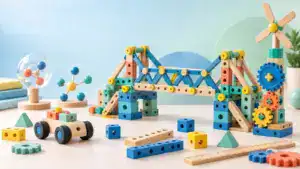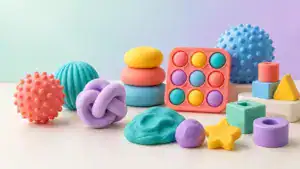
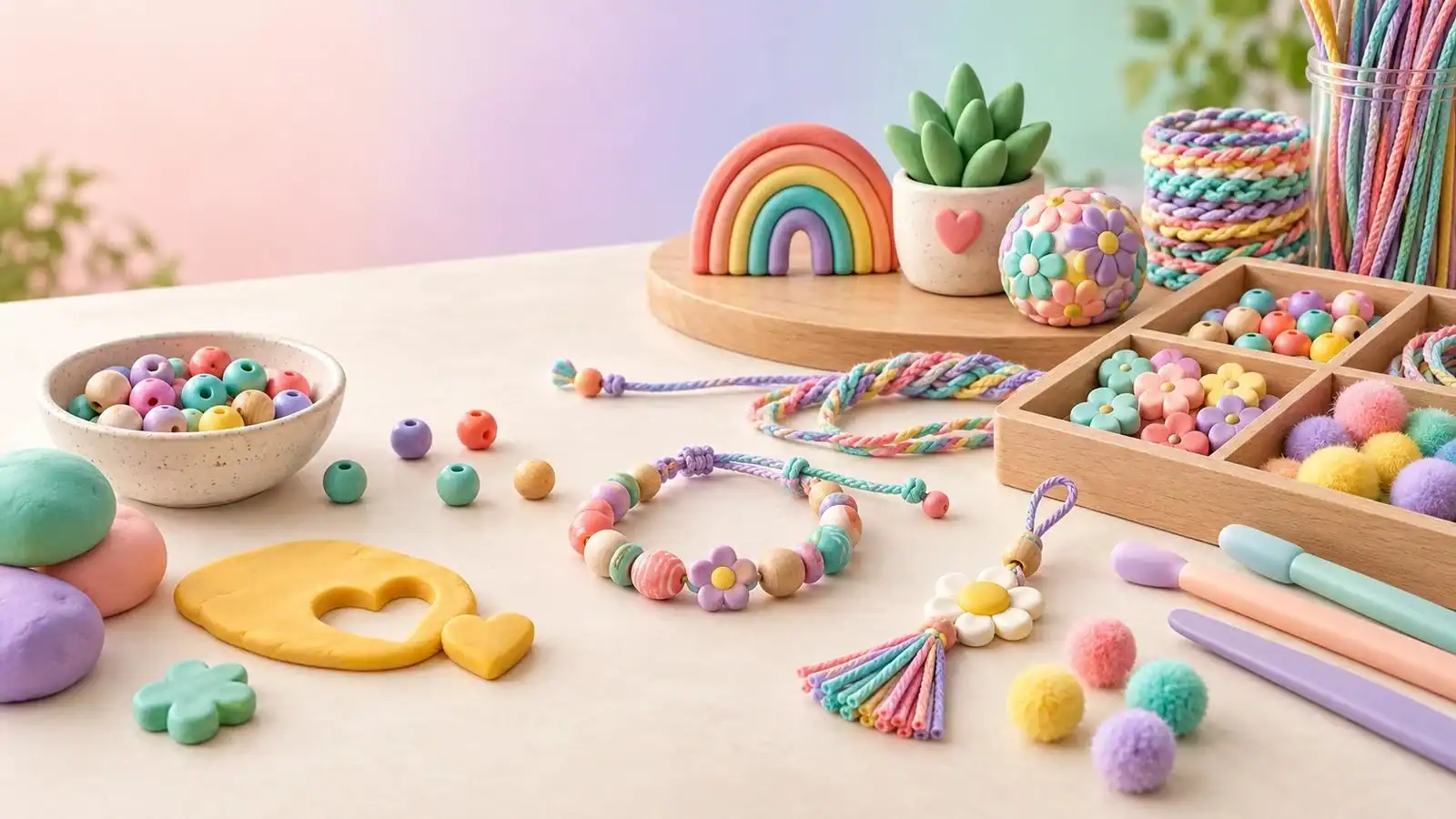
After years of increasing screen time, hands-on creativity has a fresh commercial story. Spielwarenmesse named “Creative Mindfulness” as one of its two ToyTrends for 2026, describing a focus on the conscious experience of creativity and craftsmanship. The Toy Association’s 2026 trend report also emphasized maker activities, self-expression, and toys that encourage creativity. Together, these signals make DIY craft kits a timely category for retailers, distributors, and private-label brands.
Search behavior supports the opportunity. Ahrefs estimates that “DIY craft kits” receives about 450 monthly searches in the United States and 1,300 worldwide. Those numbers are smaller than broad categories such as sensory toys, but the term expresses a clear product intent. Craft kits also connect naturally with larger themes such as educational toys, screen-free activities, personalized accessories, gifts, and family projects.
What Creative Mindfulness Means for Toy Buyers
Creative mindfulness is less about making a perfect object and more about becoming absorbed in a satisfying process. Threading beads, mixing colors, shaping material, decorating a surface, and repeating a pattern can create a calm, focused activity. The finished item still matters, especially when it can be worn, displayed, shared, or given as a gift, but the making experience is the main value.
For buyers, this trend favors products with approachable steps, pleasant materials, room for personal choice, and enough time-on-task to feel meaningful. It also broadens the audience. Younger children may enjoy simple decorating and assembly. Older children can handle finer techniques and more detailed outcomes. Teens and adults may respond to sophisticated color palettes, display-worthy results, and packaging that does not look childish.
The Best Kits Balance Guidance and Freedom
A completely open box of materials can overwhelm a beginner. A rigid project with only one acceptable result can remove the joy of creative choice. Strong DIY craft kits sit between those extremes.
The kit can begin with a clear example and visual instructions, then offer variations in color, arrangement, pattern, or decoration. A jewelry kit might show three starter designs while including enough beads and findings for original combinations. A molding kit might provide themed forms plus tools for free shaping. A painting set can include a guided technique and extra surfaces for experimentation.
This balance also improves customer satisfaction. The guided path helps the child achieve a recognizable result, while optional choices make the outcome feel personal. Buyers reviewing a sample should complete the project themselves. That simple exercise reveals unclear instructions, missing tools, unrealistic completion times, messy steps, and materials that look better in a photograph than they feel in use.
Design the Kit Around a Complete Experience
Piece count is easy to advertise, but it is not the same as value. A strong kit includes everything essential for the promised activity or clearly identifies common household items that are required. Tools should fit children’s hands and perform their intended function. Consumable quantities should allow for normal mistakes. Storage should keep small components organized between sessions.
Consider the full sequence:
- Opening: Are the contents organized and inviting rather than mixed in loose bags?
- Understanding: Can the user identify the first step without reading a long manual?
- Making: Do the materials behave consistently, and do the tools work comfortably?
- Finishing: Can the project dry, set, connect, or display as promised?
- Keeping: Is there a pouch, tray, box, stand, or other way to store the work and leftovers?
Small design decisions at each stage can separate a memorable kit from a product that is opened once and abandoned.
Personalization Increases Gift and Social Appeal
The 2026 interest in self-expression makes personalization particularly useful. Letter beads, charms, stickers, color choices, interchangeable parts, and blank surfaces allow users to create something that reflects their identity. Wearable and shareable results—bracelets, bag charms, key chains, room decorations, and small gifts—can extend the product beyond the activity itself.
Retailers can build themed programs around friendship, birthdays, travel, nature, food, pets, fantasy, or seasonal events. A coordinated range can include an accessible starter kit, a larger gift set, and refill packs. The visual identity should connect the products while giving each kit a distinct outcome.
Short-form video is valuable in this category because the transformation is naturally visual. A few seconds can show raw materials becoming a finished object. Packaging and online listings should therefore include photogenic intermediate steps as well as the final result. Buyers can ask manufacturers to plan sample making, photography, and display prototypes alongside product development.
Safety, Materials, and Mess Management
Craft kits require careful classification because the exact contents and intended play pattern determine which rules apply. Some hobby and art materials may be treated differently from children’s toys, while a kit marketed primarily as a plaything may fall within toy requirements. Components may introduce considerations involving small parts, sharp points, cords, adhesives, paints, powders, compounds, surface coatings, or skin contact.
Importers should determine the regulatory category, age grade, and applicable standards for the complete kit in each destination market. In the United States, toys intended primarily for children age 12 or younger generally require third-party testing by a CPSC-accepted laboratory and a Children’s Product Certificate. Test documents should correspond to the actual materials and components in production.
Practical mess control also affects reviews and repeat sales. Resealable containers, protective mats, measured portions, drying stands, and clear cleanup instructions can make the activity easier for families. Material claims such as washable, non-staining, or non-toxic should be specific, supportable, and consistent with the product’s directions and test evidence.
What to Ask a Craft Kit Manufacturer
Before placing an order, buyers should confirm:
- Who is the intended user, and how long should the activity take?
- Which essential tools and materials are included?
- How many complete projects can be made from one kit?
- Are consumables provided with enough allowance for mistakes?
- Which colors, components, molds, charms, themes, and package formats can be customized?
- How are small parts, material consistency, component counts, and package contents controlled?
- Which safety and labeling requirements apply in the sales market?
- Can the factory produce clear localized instructions and pre-production samples?
A Timely Category with Long-Term Potential
Creative mindfulness gives DIY craft kits a current trend story, but the category is built on lasting motivations: children like making things, gift buyers value visible outcomes, and families want engaging activities away from screens. Retailers can turn those motivations into a strong program by choosing satisfying materials, clear instructions, meaningful personalization, reliable safety support, and packaging that shows the transformation at a glance.
FI develops DIY craft kits and DIY jewelry and accessories for OEM and ODM customers. Programs can be adapted through themes, colors, components, tools, packaging, and instructions. To share a concept, target price, market, or sourcing brief, contact FI.